Great Barrier Reef (GBR) Coral Decline
Published on 17 Nov 2025
According to a recent survey by the Australian Institute of Marine Science (AIMS), Australia’s Great Barrier Reef (GBR) has recorded its worst annual coral decline in nearly four decades, mainly due to severe mass bleaching in 2024.
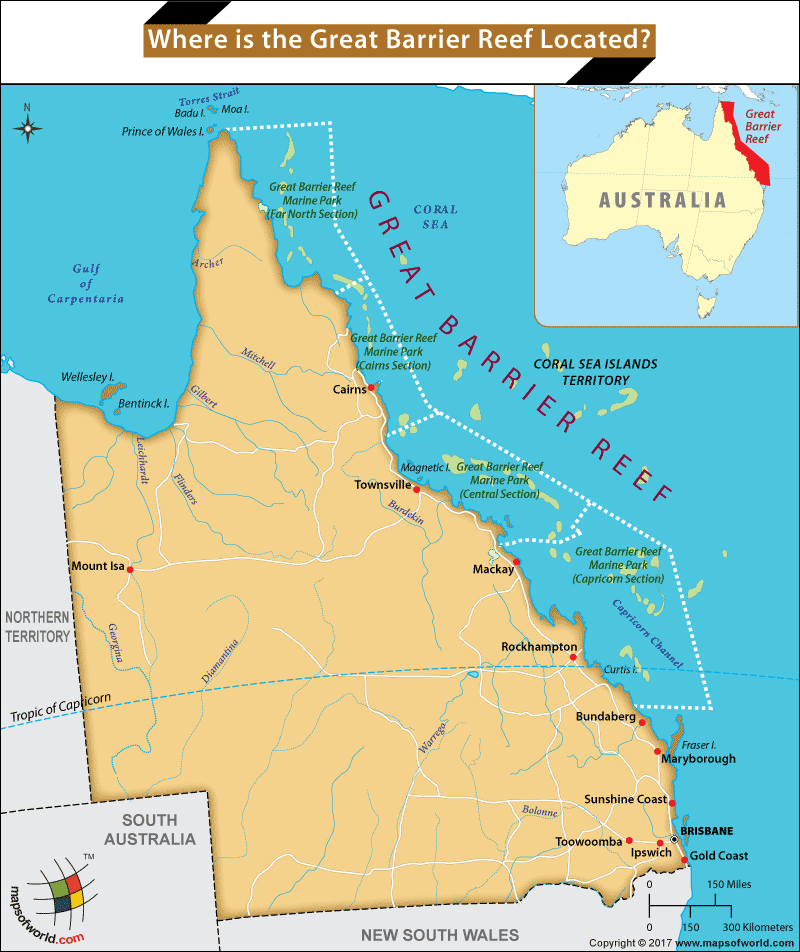
The GBR is a UNESCO World Heritage site and located in the Coral Sea off the coast of Queensland, Australia.
Coral bleaching is when corals become white due to the loss of symbiotic algae and photosynthetic pigments, causing coral polyps to expel the zooxanthellae that live inside their tissue, causing the coral to turn white.
The widespread mass bleaching of the Great Barrier Reef was first seen in 1998 and happened again in 2002, 2016, 2017, 2020, 2022 and 2024.
Key Findings:
They surveyed 124 reefs across the northern, central, and southern GBR, of these reefs, 48% showed a decline in hard coral cover, 42% showed no net change, and only 10% showed an increase.
In some locations, hard coral cover fell by more than 70%, marking the sharpest decline since long-term monitoring began in 1986.
The northern GBR, average coral cover dropped from 39.8% to 30%, a 24.8% decline, particularly around Lizard Island, which experienced the worst heat stress on record.

https://images.mapsofworld.com/answers/2017/10/location-map-of-great-barrier-reef.gif
Keywords:
Great Barrier Reef Coral Decline
corals
Coral bleaching
UNESCO World Heritage site
Austraalia
zooxanthellae
Prelims Current Affairs
Brown Trout
Bonnet Macaques
New Aspergillus Species Discovered in Western Ghats
Mains Current Affairs
Ragging in Campus
Time Use Survey 2024
Amir Khusrau and Persian Influence in Indian Culture