Dravida Style of Architecture
Published on 09 Sep 2025
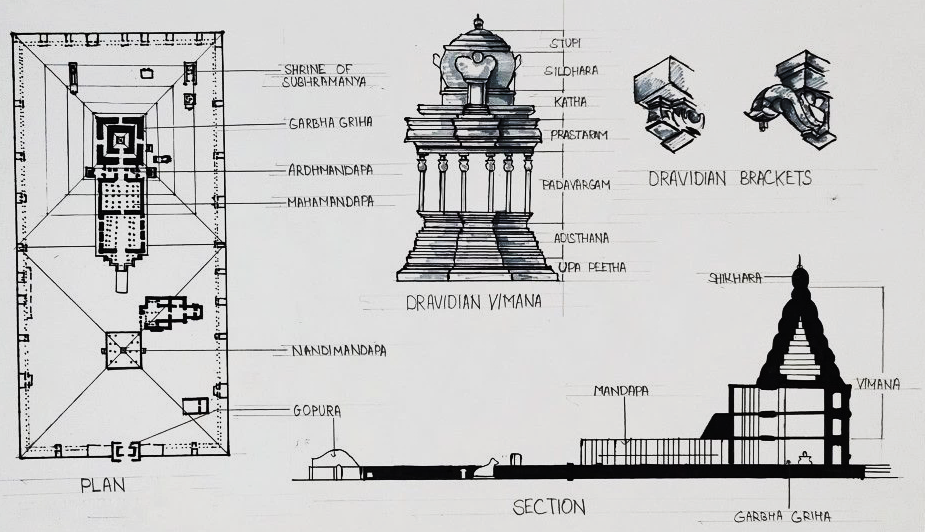
It is a prominent architectural style that originated in the southern regions of India, particularly in the states of Tamil Nadu, Karnataka, and Andhra Pradesh. Temple architecture in South India began under the Pallava ruler Mahendravarman. Some of the features of Dravida style are:
Temple Layout: Typically follow a rectangular or square plan with various sections, including the main sanctum sanctorum (garbhagriha), the mandapa, and the surrounding prakarams (enclosures). These sections are enclosed within a compound wall.
Example: Brihadeeswarar Temple in Thanjavur
Vimana: Towering pyramidal superstructure that crowns the main shrine of the temple.
Example: Gangaikondacholapuram Temple in Tamil Nadu
Mandapa: Pillared Hall which serves as assembly spaces for devotees and for conducting religious ceremonies.
Example: Meenakshi Amman Temple in Madurai
Shikhara: Relatively shorter and less prominent. Pyramidal or conical in shape
Example: Gangaikondacholapuram Temple in Tamil Nadu
Gopurams: Dravida temples are known for their monumental entrance gateways. Embellished with elaborate architectural ornamentation.
Example: Brihadeeswarar Temple in Thanjavur
Differences between Dravida and Nagara style of Architecture
Contribution of Chola in the development of temple architecture

Chola style of temple architecture
More elaborative structures: The temple architecture evolved from the early cave temples and Monolithic temples of Mamallapuram to more elaborate and complex in the Chola period.
Example: Brihadeshwara temple.
Stones replaced bricks: During this period stones were used instead of bricks for making temples. This added aesthetics and value to its temples.
Gopurams become meaningful: In the chola period simple gopurams evolved into more exquisite and well composed structures with carvings and series of effigies on them.
Elaborate pyramidal storeys: Pyramidal storey about the deity room depicts the maturity and grandeur Cholas brought in the temple architecture.
Example: Shiva temple of Thanjavur depicts the material achievement of the Chola Temple.
Monolith shikaras: The Chola temples have evolved beautiful shikharas at the top with elaborate meticulous carving.
Example: Octagonal Shikhara of Gangaikondacholapuram temple.
Dwarapalas became permanent: The guardian figures (Dwarapalas), at the entrance to the mandapa, or hall which started from the Pallava period, became a unique feature of the Chola temples.
Polished sculptures: During this period the architectural development reached its zenith. The temples were decorated with artistic stone pillars and wall decoration. Emphasis was on elongated limbs and polished features.
Example: Carvings of the wheel chariot in Airavatesvara Temple are so fine that all the minute details are visible.
Comparison between Chola and Pallava architecture
Contribution of Pallavas to the evolution of temple architecture in South India
The Pallava dynasty, which flourished in South India from the 4th to the 9th centuries, played a significant role in the evolution of temple architecture in the region. Their contributions marked a crucial transition from rock-cut cave temples to freestanding structural temples.
Rock cut temples: It consists of famous Shore Temple and the Five Rathas. These are monolithic structures. Recognised as a UNESCO World Heritage Site.
Example: Rock cut temples at Mamallapuram
Structural Temples: Kanchipuram, the capital of the Pallava dynasty, became a major centre for temple construction.
Example: Kailasanathar Temple and the Ekambareswarar Temple.
Monolithic rock-cut temples: They made exemplary contribution for the construction of monolithic rock-cut temples.
Example: Mandagapattu rock cut temple by Mahendra Varman I
Beginning of gopuras: Initiation was seen in Shore temple of Mahabalipuram.
Intricate Sculptures: Pallava temples are renowned for their intricate stone sculptures and carvings. They adorned the temple walls, pillars, and even the roofs with exquisite depictions of gods, goddesses, mythical creatures, and epic scenes.
Example: The Descent of the Ganges (Arjuna's Penance) relief in Mahabalipuram is a masterpiece of Pallava sculptural art
Influence on Later Dynasties: The Pallava architectural style had a profound impact on subsequent dynasties in South India. The Chola, Chalukya, and Vijayanagara dynasties, among others, adopted and further developed Pallava architectural elements in their temple construction.
Example: The Brihadeeswarar Temple in Thanjavur, built by the Chola dynasty, bears testament to the continued evolution and influence of Pallava architecture.
Tags:
History & Culture
Keywords:
Dravida Style of Architecture
temple Architecture
Architecture
dravida
garbhagriha
Brihadeeswarar Temple
Thanjavur
Gangaikondacholapuram Temple
vimana
Meenakshi Amman Temple
Mandapa
shikhara
Gopuram
Differences between Dravida and Nagara style
Chola
chola temple architecture
Dwarapala
Pallava
Pallav architecture
Mamallapuram
Kailasanathar Temple
Ekambareswarar Temple
Mandagapattu rock cut temple
shore temple
Mahabalipuram
dvarapala
Syllabus:
General Studies Paper 1
Topics:
Art and Architecture
Related Articles
Backgrounder
HYPOTHETICAL IMPACTS ON MODERN INDIAN HISTORY IF KEY EVENTS DID NOT HAPPEN
Gandhism vs. Moderates
Satyagrahis vs. Revolutionaries
Moderates vs. Extremists
Sardar Vallabhai Patel and Jawaharlal Nehru
Gandhi and Rabindranath Tagore
Gandhi and Bhagat Singh
Gandhi and Subhash Chandra Bose
Gandhi and Ambedkar
Role of Foreigners in Indian Freedom Struggle