INDIA PAKISTAN RELATIONS
Published on 09 Jan 2025
India-Pakistan relations have been marked by persistent political, territorial, and security disputes since 1947, resulting in periods of heightened tension, conflict, and ongoing diplomatic endeavours to seek mutual understanding and resolution.
The relationship between these neighbouring nuclear-armed countries is characterized by complex historical, political, and security dynamics that continue to shape regional stability in South Asia.
Issues Plaguing India-Pakistan Relations
Kashmir Dispute
✔ Historical Context: The Kashmir dispute has been a longstanding issue between India and Pakistan since their independence in 1947.
✔ Wars and Conflicts: The dispute has led to wars in 1947, 1965, and a limited conflict in 1999 (Kargil War). Frequent ceasefire violations have also occurred.
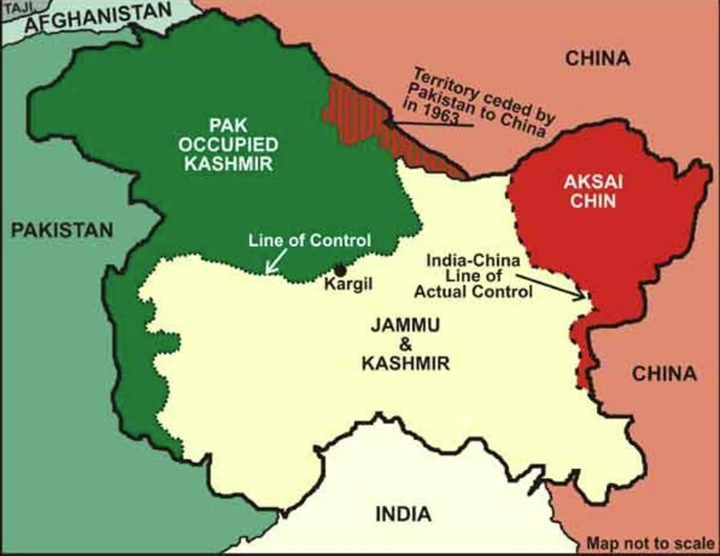
✔ Line of Control (LoC): The Line of Control, established during the Shimla Agreement, divides Kashmir between the two countries and serves as a ceasefire line post-1947 conflict.
✔ Abrogation of Article 370: India's decision to abrogate Article 370 in August 2019 altered the special status of Jammu and Kashmir, leading to increased tensions.
✔ Pakistan's Political Map: Pakistan released a new political map that includes all of Jammu & Kashmir, Ladakh, Sir Creek, and Junagadh, further exacerbating the dispute.
✔ Gilgit-Baltistan Dispute: Pakistan's recent decision to elevate Gilgit-Baltistan's status to that of a full-fledged province has added complexity to the dispute.
✔
China-Pakistan Economic Corridor (CPEC)
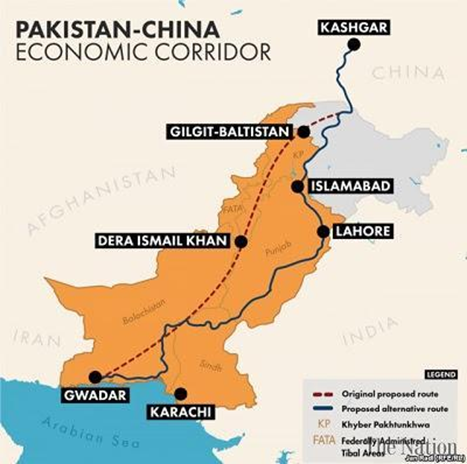
✔ Belt and Road Initiative (BRI): CPEC is a flagship project of China's ambitious Belt and Road Initiative, aimed at enhancing connectivity and infrastructure development.
✔ Route and Objectives: The project connects western China (Xinjiang) to the Gwadar Port in Balochistan, Pakistan, via the Khunjerab Pass in northern Pakistan.
✔ India's Concerns: India has expressed strong objections to CPEC as it passes through Pakistan-occupied Kashmir (PoK), raising territorial and sovereignty concerns.
✔ Geopolitical Implications: China aims to address the Malacca Dilemma by developing alternative trade routes like CPEC, specifically focusing on Gwadar Port in Pakistan to bypass the Strait of Malacca and lessen dependence on a single maritime route.
✔ Siachen Glacier Dispute
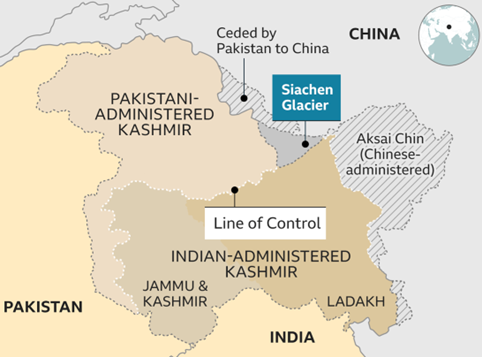
✔ Location: Siachen Glacier is in Northern Ladakh and is part of the Karakoram Range.
✔ Historical Background: Pre-1984, no permanent presence by India or Pakistan. The Shimla Agreement (1972) didn't define the boundary.
✔ Strategic Significance: Both nations deployed forces due to strategic importance, with India controlling higher altitudes.
✔ Challenges: Extreme weather and human suffering are significant challenges in the region.
✔
Sir Creek Dispute
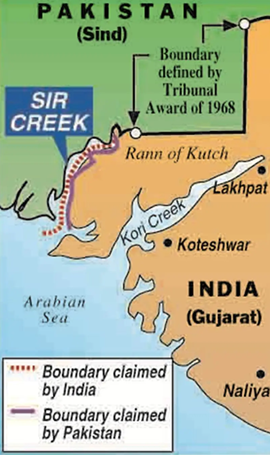
✔ Location: Sir Creek is a 96 km estuary between Gujarat (India) and Sindh (Pakistan).
✔ Historical Disagreement: The dispute centers on the maritime boundary interpretation. Pakistan claims the whole creek based on a 1914 agreement, and India argues for a mid-channel boundary per a 1925 map.
✔ Resource-Rich: Resolving the dispute impacts access to a resource-rich Exclusive Economic Zone (EEZ).
✔ Impact: Disagreement affects fishing and navigation in the area, impacting livelihoods.
Cross-Border Terrorism and Ceasefire Violations
✔ Persistent Issue: Cross-border terrorism has been a longstanding issue between India and Pakistan since their independence.
● Example: Pakistan is alleged to be a safe haven for terrorist groups including Al-Qaeda, Lashkar-e-Taiba (LeT), Jaish-e-Mohammed (JeM), ISIS-KP, etc.
✔ Ceasefire Violations: Both countries have experienced frequent ceasefire violations along the Line of Control (LoC) in Kashmir, leading to casualties and heightened tensions.
Trade Dispute
✔ MFN Status Withdrawal: After the Pulwama attack in February 2019, India withdrew Pakistan's Most Favoured Nation (MFN).
✔ Customs Duty: India imposed a 200% customs duty on all Pakistani goods entering India as a response to the attack.
✔ Blocking trade with Afghanistan: Afghan trucks transporting goods to the Wagah border trade post are reportedly encountering restrictions from Pakistan that prevent them from transporting Indian products.
Kulbushan Jadhav Case
✔ Arrest and Accusation: Pakistan arrested Kulbushan Jadhav, a retired Indian Naval Officer, near the Iran-Pakistan border in 2017, accusing him of espionage and spying.
✔ Sentencing: Pakistan's military court sentenced him to death, while India contends he was a retired officer on a business trip to Iran and was falsely framed.
✔ Consular Access: India repeatedly sought consular access to Jadhav, which Pakistan initially denied, citing national security concerns. The International Court of Justice (ICJ) later ordered Pakistan to provide consular access.
Kartarpur Corridor
✔ Agreement: India and Pakistan signed an agreement to operationalize the Kartarpur Corridor, initially valid for five years.
✔ Visa-Free Movement: The corridor allows visa-free movement of Indian pilgrims to visit the Kartarpur Sahib Gurdwara in Pakistan, requiring only a permit.
✔ Concerns: India has expressed concerns over Pakistan potentially promoting separatist Khalistani groups and the possible misuse of the corridor for drug and arms trafficking due to the porous border in the Punjab region.
Political Crisis
✔ Imran Khan Ousted: Former Prime Minister Imran Khan was removed via a vote of no confidence, leading to political instability.
✔ Potential Pakistan Spring: Dissatisfaction with the government has raised concerns of a "Pakistan Spring," akin to the Arab Spring, indicating a desire for change.
✔ Rise of Taliban and TTP: The Taliban and Tehreek-e-Taliban Pakistan (TTP) have gained strength since the U.S. withdrawal from Afghanistan.
✔ Security Challenges: The TTP's expansion into Balochistan and Punjab has led to attacks on Pakistan's armed forces, creating a two-front war.
|
Implications of Pakistan’s political instability on India
✔ Nuclear Proliferation Concerns: The potential for instability in Pakistan poses a risk to the secure control of its nuclear arsenal, creating regional security anxieties and escalating tensions. ✔ Refugee Crisis: Economic upheaval in Pakistan may trigger a refugee crisis, placing strain on India's resources and giving rise to social challenges. ✔ Escalation of Cross-Border Tensions: The political crisis in Pakistan could lead to provocations against India, such as support for militants or violations of ceasefires, particularly in Kashmir, diverting attention from internal issues. ✔ Compromised Regional Security: Instability in Pakistan may compel increased reliance on neighbouring countries, heightening regional tensions, including with India.
Opportunities India can leverage from Pakistan’s political instability
✔ Diplomatic Leverage: India can use its diplomatic influence to isolate Pakistan internationally, shedding light on alleged support for terrorism and human rights violations. ● Example: Use of FATF and the Eurasian Group on Combating Money Laundering and Financing of Terrorism (EAG). ✔ Regional Power Projection: India's ability to maintain stability and manage regional challenges in contrast to Pakistan's internal strife can enhance its image as a responsible regional power. ● Example: India can strengthen ties with Iran and Central Asian countries to counter Pakistan's influence in the region. ✔ Multilateralism: Strengthening alliances and partnerships in South Asia and the Middle East can further bolster India's regional standing. ✔ Strengthening Regional Connectivity: India can capitalise on Pakistan's challenges by promoting regional connectivity initiatives. ● Example: Projects like the Chabahar port in Iran or the International North-South Transport Corridor (INSTC). ✔ Economic Cooperation: With Pakistan facing economic challenges, India can leverage its economic growth and stability to attract FDI and foster closer economic ties with other nations. |
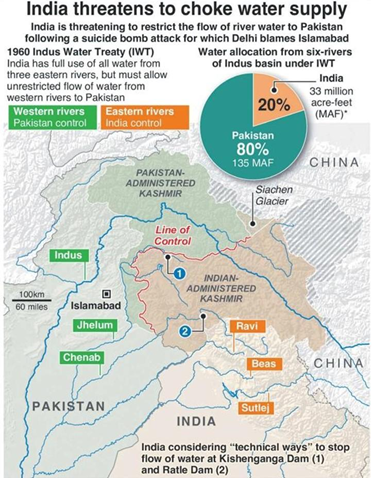
The
Indus Waters Treaty (IWT)
The Indus Waters Treaty (IWT)
is a water-sharing agreement between India and Pakistan signed in 1960
post negotiations mediated by the World Bank. It outlines the arrangement
for the utilization of water from the Indus River and its tributaries by the
two countries.
Characteristics of the Indus Water Treaty
✔ Key Rivers: the treaty involves the Indus River and its tributaries Jhelum, Chenab, Ravi, Beas, and Sutlej, shared between India and Pakistan.
✔ World Bank Mediation: In 1960, a treaty mediated by the World Bank was signed between India and Pakistan.
✔ Exclusive Rights to India: Under the treaty, India was allocated exclusive rights to utilize the waters of the Ravi, Sutlej, and Beas rivers.
✔ Pakistan's Allocated Rivers: The treaty designated the use of waters from the Indus, Jhelum, and Chenab rivers to Pakistan, with India having non-consumptive use rights.
✔ Water Allocation Percentages: The treaty stipulates that India receives 20% of the water from the Indus River System, while Pakistan is entitled to the remaining 80%.
✔ Hydroelectric Projects: India is granted the authority to generate hydroelectricity through run-of-the-river (RoR) projects on the Indus, Jhelum, and Chenab rivers, subject to specific design and operational criteria.
✔ Dispute Resolution Mechanism: To address potential disputes, a Permanent Indus Commission was established.
Why India should abrogate the treaty?
✔ Hostilities: Pakistan’s increasing hostilities towards India have led the state to reconsider its generous stance on IWT.
● Example: During a military standoff between both countries in 2001-’02 the Indian government threatened to scrap the treaty.
✔ Poor negotiations: Pakistan’s negotiation processes is not in line with Article 9 of the treaty (If there's any question about what this Treaty means, the Commission will take a look first. They'll try to figure it out together and come to an agreement).
● Example: In 2016 Pakistan first asked the World Bank to appoint a neutral expert and later sought arbitration as if the matter was a “dispute”, even though India had agreed to have a neutral expert.
✔ Obstructing projects: India asked Pakistan to withdraw its objections to the Tulbul project saying that the proposed navigational locks were not in violation of the Indus Water Treaty.
✔ National Sovereignty: The treaty restricts India's full sovereignty over its share of the Indus River waters, particularly the western rivers allocated to Pakistan.
✔ Water Scarcity: Parts of India, particularly in the arid western regions, face water scarcity issues. Nullifying the treaty could allow India to have greater control over water resources for its own development.
✔ Security Concerns: Critics of the treaty argue that it ties India's hands in times of conflict with Pakistan by limiting its ability to use water as a strategic resource.
✔ Historical Context: The treaty was signed in 1960 when the geopolitical landscape was different. Some argue that it no longer serves India's interests in the current context.
Why should India not abrogate the Indus Water Treaty?
✔ Historical Success in Diplomacy: The 1960 Indus Waters Treaty is recognized as a significant diplomatic achievement, enduring even through India-Pakistan conflicts and wars.
✔ Humanitarian Consequences: Abandoning the treaty would have severe humanitarian consequences for Pakistan, which is already grappling with water stress.
✔ Risk of Instability: Such a move could provoke anxiety and potentially lead to violence and instability in Pakistan.
✔ Valuing Democracy and Human Rights: As a nation that upholds democratic values and human rights, India should avoid actions that harm another nation's citizens.
✔ Impact on Neighbors: Scrapping the treaty would raise concerns among other neighbouring countries like Bangladesh and Nepal, with whom India has water-sharing agreements.
✔ Global Image: Terminating the treaty would tarnish India's international reputation and standing in the global community.
✔ Storage Limitations: India lacks the storage capacity to immediately disrupt Pakistan's water supply.
✔ China's Role: India is a lower riparian state for many rivers, including the Indus, Sutlej, and Brahmaputra, which originate in Tibet. India lacks a treaty with China to manage these river relationships, and China could potentially divert water from India if India disrupts Pakistan's supply.
Way Forward
✔ Rational Diplomacy: India should pursue a rational approach and explore alternative means to exert pressure on adversaries without jeopardizing its own credibility.
✔ Ensure proper functioning of Permanent Indus Commission: The Commission, according to the treaty, shall meet regularly at least once a year, alternately in India and Pakistan.
✔ International Cooperation: Collaborating with like-minded countries such as the USA, UK, and France can help India apply pressure on Pakistan.
● Example: Use of diplomatic channels and international forums like the Financial Action Task Force (FATF).
✔ Diplomatic Isolation: India can also consider diplomatic isolation of Pakistan in South Asia, as it did successfully in 2016 by boycotting the SAARC summit, to target Pakistan's support for terrorism.
The Indus Waters Treaty has demonstrated its resilience and durability, enduring through the Indo-Pak conflicts of 1961, 1975, and 1991. This enduring testament to successful diplomacy should be upheld and preserved.
Areas of Possible Cooperation between India and Pakistan
✔ Cultural
● Exchange of Ideas and Values: Foster socio-cultural cooperation by exchanging ideas, traditions, and cultural aspects.
● Bilateral Artistic Exchanges: Promote peace and stability through bilateral exchanges of art, music, dance, theatre, and artists.
o Example: The popularity of Urdu poetry, ghazals, and shows like Coke Studio, and MTV Unplugged in both countries.
● Sports Diplomacy: Organize bilateral sports events like cricket to ease political tensions.
● Religious Tourism Potential: Develop religious tourism between India and Pakistan
o Example: Visits to Nankana Sahib, Kartarpur, Katas Raj Temple, Ajmer Sharif, and Nizammudin Auliya’s dargah.
● Education and Cultural Exchanges: Promote student and faculty exchanges to strengthen bilateral ties.
● Professional and Intellectual Collaboration: Invite professionals, intellectuals, and artists to events for mutual understanding and cooperation.
✔ Economic
● Bilateral Trade: Strengthen economic ties through increased bilateral trade to alleviate unemployment and poverty, improving living conditions.
o Example: Improve ties via Wagah-Attari border crossing and the implementation of trade pacts like the South Asian Free Trade Area (SAFTA).
● Tariff Reduction: Reduce high import tariffs, which currently stand at 200%, and invoke the Most Favoured Nation status to boost economic cooperation.
✔ Solving Common Problems
● Climate Change and Natural Disasters: Collaborate on shared challenges like climate change and natural disasters.
o Example: Cooperation in dealing with locust attacks, which both countries face, can lead to mutual benefits and improved relations.
To strengthen bilateral engagements between India and Pakistan, a strategic approach that combines both soft and hard power diplomacy, complemented by effective international diplomacy, is essential. This balanced approach can help address historical disputes, build trust, and promote cooperation while also ensuring the security and strategic interests of both nations are considered.