INDIA CENTRAL ASIA RELATIONS
Published on 28 Jan 2025
India's relationship with Central Asia dates back millennia, characterized by deep cultural ties, trade, and interpersonal exchanges, with origins in the Indus Valley civilization. These connections weakened after India's partition in 1947, which eliminated a direct land route, forcing Indian exports to Central Asia to take longer and less competitive sea routes via Iran.
However, India's strong political relationship with the Soviet Union maintained its diplomatic connections with Central Asia after independence. Following the Cold War's end in 1991, India, uniquely positioned as the only non-communist nation with a diplomatic presence in Central Asia, strengthened its ties with the newly independent republics of Kazakhstan, Kyrgyzstan, Tajikistan, Turkmenistan, and Uzbekistan.
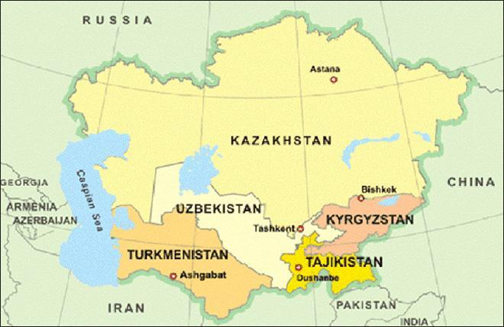
Significance of Central Asia for India
✔ Economic
● Agricultural Opportunities: Central Asia has vast barren cultivable lands that offer significant opportunities for cultivating pulses, where Indian agribusinesses can establish agro-industrial complexes.
● Economic Growth: The region’s economic growth has opened up numerous opportunities in construction, providing significant prospects for Indian companies in financial services, contracting, engineering, and management.
● Gateway to Eurasia: For India to effectively use the Chabahar Port to access Eurasian markets, involving a Central Asian state as a direct stakeholder is essential.
● Global Linkages: Central Asian regions are rapidly integrating into the global market for production, raw material supply, and services, and are becoming part of the East-West Trans-Eurasian economic corridors.
✔ Geographic
● Geopolitical Bridge: Central Asia serves as a crucial land bridge between Asia and Europe, making it strategically important for India.
● Natural Resources: The region is abundant in natural resources such as petroleum, natural gas, antimony, aluminium, gold, silver, coal, and uranium, which are vital for India's energy needs.
✔ Political
● Shared Interests: India and the Central Asian Republics (CARs) share many views on regional and global issues, playing a crucial role in regional stability.
● Security and Stability: The security, stability, and prosperity of Central Asia are essential for India's peace and economic development.
o Example: Religious extremism, fundamentalism and terrorism continue to pose challenges to Central Asian societies as well as regional stability.
Challenges in India Central Asia relations
✔ Physical Connectivity: Pakistan's hostility and Afghan instability hinder physical connectivity between India and Central Asia.
● Example: The need for alternative routes like the International North-South Transport Corridor (INSTC) to bypass these obstructions.
✔ Trade Volume: India’s trade with Central Asia is minimal due to poor transport connectivity.
● Example: Current trade volumes cannot significantly increase without projects like Chabahar Port and INSTC.
✔ Political Fragility: Central Asian republics face political instability and threats like terrorism and Islamic fundamentalism.
● Example: Frequent security concerns in countries like Afghanistan and Tajikistan affecting regional stability.
✔ Bureaucratic Hurdles: Issues like lack of hard currency, inadequate banking services, and corruption hinder smooth bilateral relations.
● Example: Difficulty in executing business deals due to unreliable financial systems in countries like Uzbekistan.
✔ Strategic Focus: India’s "Look East" policy has diverted economic and diplomatic resources towards Southeast and East Asia.
● Example: Increased investment and diplomatic efforts in ASEAN nations over Central Asian states.
✔ Chinese Influence: China’s involvement in Central Asia through the Belt and Road Initiative could undermine India’s influence.
● Example: China's infrastructure investments in Kazakhstan and Kyrgyzstan enhancing its regional dominance.
✔ Drug Trafficking: Porous borders, corruption, and proximity to opium production areas make Central Asia a hotspot for drug and money trafficking.
● Example: The Golden Crescent and Golden Triangle regions contribute to high rates of drug flow through Central Asian countries like Tajikistan.
Cooperation between India and Central Asia
✔ Energy Cooperation: Energy is the most crucial area of cooperation between India and Central Asia due to the region's vast energy resources.
● Example: Kazakhstan has supplied nuclear fuel to India since 2010, marking early civil nuclear cooperation. The TAPI project connects Turkmenistan’s natural gas to India, linking Central Asia's energy to South Asia.
✔ Security and Defense: The security, stability, and prosperity of Central Asia are vital for India's peace and economic development.
● Example: India conducts annual military exercises such as "Khanjar" with Kyrgyzstan and "Kazind" with Kazakhstan. India's membership in the Shanghai Cooperation Organisation (SCO) allows it to contribute to regional stability, particularly in Afghanistan.
✔ Regional Engagement: India’s involvement in Central Asia provides strategic and economic benefits, including enhanced engagement with China and Pakistan and increased regional influence.
● Example: Participation in the Eurasian Economic Union (EEU) and the promotion of India’s Connect Central Asia policy facilitate economic integration and energy resource access.
✔ Development Cooperation: India focuses on development cooperation through lines of credit, training programs, and grants for infrastructure projects.
● Example: Funding for the rehabilitation of the Varzob-1 Hydro Power Plant in Tajikistan and plans for a medical and educational E-Network in Central Asia based on the Pan African e-Network model.
✔ Economic Growth: The economic development of Central Asia, particularly in Kazakhstan, Turkmenistan, and Uzbekistan, offers opportunities in IT, pharmaceuticals, and tourism.
● Example: Kazakhstan is India’s largest trade and investment partner in Central Asia, highlighting the potential for deeper economic cooperation.
✔ Cultural Cooperation: India's cultural diversity and affordable higher education attract many students from Central Asia, fostering people-to-people connections.
● Example: Central Asians frequently listen to Hindi music and watch Bollywood movies, reflecting India's cultural popularity in the region.
✔ Connectivity: Enhancing connectivity through projects like the International North-South Transport Corridor (INSTC) and membership in the Ashgabat Agreement is crucial for facilitating trade.
● Example: The INSTC connects India with Central Asia and Europe via a multi-mode network, while the Ashgabat Agreement facilitates transportation of goods between Central Asia and the Persian Gulf.
|
International North-South Transport Corridor (INSTC) The International North-South Transport Corridor (INSTC) was established on September 12, 2000, in St. Petersburg by Iran, Russia, and India to promote transportation cooperation among member states.
✔ This corridor connects the Indian Ocean and the Persian Gulf to the Caspian Sea via Iran, then extends to St. Petersburg and North Europe through Russia. ✔ The INSTC has expanded to include eleven new members, including Azerbaijan, Armenia, Kazakhstan, Kyrgyz Republic, Tajikistan, Turkey, Ukraine, Belarus, Oman, Syria, and Bulgaria (as an observer). Importance of INSTC ✔ Boost bilateral trade: Enhanced transport connectivity between Russia, Central Asia, Iran, and India is projected to boost bilateral trade volumes. ✔ Reduce travel time: Activating the corridor could reduce travel time between India and Russia to 16-21 days, fostering trade development at competitive freight rates. Current routes via Rotterdam or China to Russia and Central Asia are lengthy, costly, and time-intensive. ✔ Cheaper routes: A study by the Federation of Freight Forwarders' Associations in India indicates the INSTC route is 30% cheaper and 40% shorter than traditional routes. ✔ Export competitiveness: Access to Central Asian markets via the INSTC could give Indian exports a competitive edge with lower costs and faster delivery. ✔ Countering China: The INSTC holds economic and strategic importance for India, countering China's regional ambitions through the One Belt, One Road Initiative. ✔ Trade expansion: Turkey's offer to link the Black Sea Economic Cooperation (BSEC) with INSTC could facilitate trade expansion. Challenges of INSTC ✔ Lack of institutional mechanism: The INSTC lacks a robust institutional mechanism to address operational challenges, such as customs procedures and documentation. ✔ Funding challenges: Ongoing concerns exist regarding the funding of essential infrastructure and the relatively low level of containerization along the route. Wagon shortages further hinder smooth operations. ✔ Lack of cooperation: Participating nations encounter obstacles due to the absence of common border crossing rules. ● Example: Disparities in tariffs between rail and road transport, especially concerning movements from Bandar Abbas, pose challenges. ✔ Security concerns arising from Islamic insurgents east and west of the route, along with associated high insurance costs, present additional hurdles. The Ukraine conflict has prompted Russia and Iran to refocus on the INSTC. The 2021 Suez Canal blockage highlighted the INSTC as a necessary alternative. As global tensions and logistical challenges persist, the INSTC emerges as a crucial strategic pathway for international trade.
Ashgabat Agreement Ashgabat Agreement came into force in April 2016. India joined the Ashgabat Agreement in 2018. The aim of agreement is to establish an international multimodal transport and transit corridor between Central Asia and the Persian Gulf. It also aims to enhance connectivity within the Eurasian region and synchronize it with other regional transport corridors, including the International North-South Transport Corridor (INSTC).
Importance of Ashgabat Agreement ✔ Easier trade and interaction: With India's focus on commercial engagement with Asia and Eurasia, the proposed trade and transit corridor aims to facilitate easier trade and interaction with the region. ✔ In line with national policy: The Indian government initiated the National Policy on Integrated Transport (NPT) in 2015 to bolster connectivity within the International North-South Transport Corridor (INSTC). ✔ Tapping transcontinental land routes: The implementation of the corridor would enable India to redirect freight traffic from sea routes to transcontinental land routes. ✔ Indian influence in central Asia: Development plans such as the construction of a multi-purpose terminal in Chabahar and the proposed 610-km railway line from Chabahar to Zahedan were made feasible after India's involvement in the transport mechanism led by Central Asia.
Way forward ✔ Promote trade and connectivity: India must leverage its membership in the Ashgabat Agreement to increase its trade ties with the Central Asian countries and promote regional connectivity. ✔ Maintain regional stability: India must also engage in dialogue with other outside powers in the region to safeguard its interests and maintain regional stability. ✔ Chabahar as a game changer: India should continue to invest in the development of Chabahar port as a strategic gateway to Central Asia and as an alternative to Gwadar port in Pakistan. |
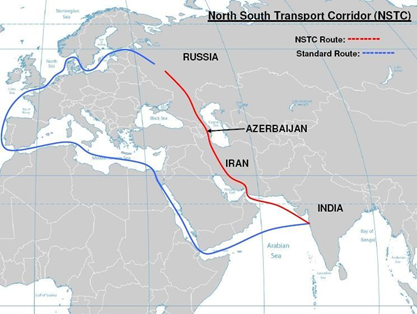
Way Forward
✔ Negotiating a Free Trade Agreement (FTA) with the EAEU could transform the trade landscape, boosting it from $10 billion to an estimated $170 billion.
✔ India should leverage its historic Silk Route connections to Central Asia to tap into the region's abundant energy resources.
✔ Utilizing economic leverage effectively, India can strengthen its ties with Central Asian nations, opening up avenues for cooperation in various sectors.
✔ The "Connect Central Asia" Policy outlines a multifaceted approach, covering political, security, economic, and cultural collaboration between India and Central Asian countries.