INDIA WEST ASIA RELATIONS
Published on 28 Jan 2025
Since India’s independence, its relations with the larger West Asia region have been both historically rooted and contemporarily critical, specifically in the spheres of economy and people-to-people ties. From partnerships formed in and around the Non-Aligned Movement (NAM) to critical components such as energy security and diaspora, much has changed in India’s relations with the Persian Gulf and Israel alike.
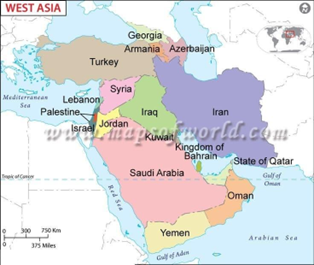
Significance of West Asia for India
✔ Economic
● Economic Importance: Indian companies have made substantial investments in the region, particularly in sectors like infrastructure, construction, and technology.
o Example: UAE now has become the country’s third largest trading partner as trade crossed the US$128-billion mark in 2022-23.
● Crude Oil Trade: Historically, India has been a significant importer of crude oil from Iran, reducing its dependence on other nations.
o Example: It is dependent on imports for 80% of its oil needs, of which roughly 55% is sourced from the Persian Gulf region.
✔ Social
● Diaspora Contribution: The substantial Indian diaspora in West Asia, plays a pivotal role in the region's economic and cultural landscape.
o Example: India has approximately 3.5 million expatriates in the United Arab Emirates and 2.5 million in Saudi Arabia.
● Cultural Affinities: India shares a longstanding history of cultural exchange with West Asian nations, further strengthening the bilateral ties.
o Example: Construction of the BAPS Hindu temple in Abu Dhabi marks the Middle East's first traditional Hindu stone temple.
✔ Geopolitical
● Gateway to Central Asia: West Asia's geographical proximity positions it as a potential gateway to landlocked Central Asia.
o Example: India's involvement in projects like the development of the Chabahar port in Iran exemplifies this regional connectivity.
● Diplomatic: West Asia is important to India’s diplomatic engagements.
o Example: India’s Look West Policy has been complemented by the GCC’s "Look East” policy.
Areas of Cooperation
✔ Political
● Diplomatic Agreements: Cooperation has been improved through agreements between nations.
o Example: The Abraham Accords involving Israel, the UAE, and the US, have contributed to stability in the region, allowing India to advance its economic and trade objectives.
● Leadership-Level Engagement: Indian Prime Minister Narendra Modi's frequent visits to the UAE demonstrate an unprecedented level of leadership-level outreach.
● Defense and Technology Partnerships: India has established new partnerships particularly in the fields of defense and technology
o Example: The I2U2 grouping, comprising India, Israel, the UAE, and the US, serves as a diplomatic framework for enhancing collaboration.
✔ Economic
● Trade and Commerce: West Asia is a significant trading partner for India.
o Example: The Gulf and West Asia region is the biggest trading block for India, with a US$240 billion bilateral trade in 2022-23.
● Strategic Partnerships: India has established strategic partnerships with various West Asian countries, strengthening political and security interests.
o Example: India has a Comprehensive Economic Partnership Agreement (CEPA) with the UAE and a strong defense relationship with Israel.
● Connectivity Initiatives: India is actively engaged in connectivity projects aimed at enhancing regional trade and economic cooperation.
o Example: Key initiatives include INSTC and the Ashgabat Agreement.
● Remittances: The Indian diaspora in West Asia plays a pivotal role by sending significant remittances back to India, contributing significantly to the Indian economy.
o Example: UAE is the second-largest source of remittances to India.
● Energy: Energy security is a key ingredient of India’s interest in West Asia.
o Example: Saudi Arabia is the third-biggest supplier of crude oil to India, and Iraq in the second spot.
✔ Social
● Migration and Labor Movement: There is a substantial flow of migration and labor movement between India and West Asia, with millions of Indians working in the region.
o Example: There are around 8 to 9 million Indians in West Asia.
● Humanitarian Assistance: India has provided humanitarian assistance to West Asian countries during times of crisis.
o Example: Operation Raahat (2015), Vande Bharath (2021) in Yemen.
✔ Bilateral Ties: India maintains strong bilateral relationships with specific West Asian countries:
● India-UAE Ties: The UAE is a crucial trade partner and export destination for India, with a significant Indian expatriate community.
● India-Iraq Ties: Iraq is a major trading partner and a key supplier of oil to India.
● India-Qatar Ties: Qatar is India's primary source of natural gas, contributing significantly to India's energy needs.
● India-Oman Ties: India's access to the Port of Duqm in Oman strengthens its maritime presence in the Indian Ocean and bolsters economic ties.
Challenges in India West Asia relations
✔ Economic
● Limited Economic Ties: India's trade with West Asian countries remains relatively limited, accounting for only a small percentage of its global trade.
● Energy Security: India heavily relies on energy imports from West Asia, making it vulnerable to disruptions in the supply of these vital resources.
✔ Political
● Geopolitical Tensions: West Asia is marked by geopolitical tensions and complexities, requiring India to navigate intricate diplomatic relationships.
o Example: Managing its stance between Israel and Palestine.
● Terrorism Threat: The rise of extremist groups, such as the Islamic State, has created security concerns for the Indian diaspora residing in West Asia.
o Example: The radicalization of Indian youth and their affiliation with such groups has been a pressing issue.
● Sectarian Tensions: Sectarian tensions between Shia and Sunni Muslims in West Asia can affect India's relations with countries in the region.
● Pakistan Factor: Pakistan's close alliances with several West Asian countries, especially within the Gulf Cooperation Council (GCC), influence regional dynamics and can impact India's relations.
✔ China Factor
● Rising diplomacy: China is increasing its diplomatic engagement in region enhancing its soft power.
o Example: China is playing a bigger role as peacemaker, which was evident in the Iran-Saudi reconciliation agreement
● Iran Relations: China is forging security and military partnerships with Iran that will influence India's relationship with Iran, Afghanistan, and Central Asian nations.
o Example: China has become Iran's largest trading partner and has committed a substantial investment of $400 billion in Iran over 25 years in exchange for a steady oil supply.
● Israel: Israel is a strategic ally for India, and China's increasing presence in key Israeli infrastructure poses challenges for both countries
o Example: China's investments in Israel, including the expansion of the Haifa port and the construction of the Ashdod port, raise concerns for India.
● UAE: China’s closeness with UAE has implications for India's interests and security, given the strategic importance of the UAE in India's foreign policy.
o Example: The UAE's collaboration with Chinese multinational Huawei for its 5G project highlights China's growing influence in the region.
✔ Internal Conflicts.
● Iran-Saudi Conflict: The Shia-Sunni rivalry between Iran and Saudi Arabia affects multiple regional hotspots, impacting India's diplomatic efforts in the region.
● Yemen Conflict: The Yemeni conflict involving Shia and Sunni groups poses threats to maritime security in key waterways.
✔ Social
● Indian Diaspora Challenges: Multiple challenges faced by Indian diaspora.
o Example: The exploitative Kafala sponsorship system and the impact of the pandemic, including company shutdowns and restricted movement.
|
India's Look West Policy India's Look West Policy aims to enhance economic, diplomatic, and strategic engagement with West Asia, addressing a wide range of interests and priorities.
Objectives
✔ Diaspora and Remittances: Leverage the Indian diaspora in West Asia for economic support through remittances and enhance connections with expatriates. ✔ Geostrategic Framework: Strengthen diplomatic ties with West Asian countries to secure support for India on global platforms, including OIC and UNSC candidature. ✔ Political Engagement: Foster strong political relations with India-friendly governments in the Gulf region and cultivate strategic partnerships. ✔ Security and Stability: Ensure peace, political stability, and security in West Asia to safeguard vital sea lanes, engage in military exercises, and access strategic ports. ✔ Energy Security: Diversify energy sources from West Asia to meet India's growing energy needs. ✔ Trade and Investment: Bolster economic ties, trade relations, and attract investment from top trading partners like the UAE and Saudi Arabia for infrastructure development. ✔ Regional Influence: Utilize West Asia as a gateway to expand India's role in Central Asia and promote regional connectivity and economic cooperation.
|
Way Forward
✔ Economic Engagement: Prioritize the speedy completion of a free trade agreement with the Gulf Cooperation Council (GCC).
✔ Counterterrorism and Security Cooperation: Establish mutual security and military pacts with countries like Israel, Saudi Arabia, Bahrain, and Turkey, focusing on intelligence sharing, counterterrorism operations, and joint armed forces exercises to enhance security collaboration.
✔ I2U2 grouping: Expand it to include more West Asian countries and sign a regional sustainable development treaty to address climate change and sustainability challenges collectively.
✔ Cultural Exchange: Promote cultural exchange through initiatives like Indian Cultural Centers in West Asian countries to foster stronger cultural ties and mutual understanding.
✔ Political approach: Increase the frequency of political-level visits, ministerial and official-level interactions, and predictability in diplomatic engagement.
✔ Active Role in the Region: India should engage proactively in West Asia to address growing political and economic instability in the region.
✔ Reassuring Key Partners: India must reaffirm its commitment to building the North-South corridor through the Chabahar port, even amid changing dynamics in Afghanistan.
✔ Workforce Relocation: India can serve as a stable source of workforce for companies looking to relocate from China, combining resources from the UAE, US, and Israel to enhance productive aspects
As the Gulf looks at a future beyond oil, they have embarked on massive economic diversification and are investing in a variety of new projects including renewable energy, higher education. India must get its businesses to focus on the range of new opportunities in the Gulf.