INDIA JAPAN RELATIONS
Published on 22 Jan 2025
Since becoming strategic partners in 2007, relationship between New Delhi and Tokyo has been transformed into a partnership with “great substance and purpose” and a cornerstone of India’s “Act East Policy”. In the context of 21st century, India Japan bilateral relation has the potential to transcend this era into an “Asian century.
Areas of Cooperation
✔ Political
● Shared Values: Common values include democracy, human rights, and rule of law leading to active collaboration in UN, SAARC, EAS, and ARF forums.
o Example: Both are members of G4 to expand UNSC membership.
● Foreign Policy Support: The India-Japan relationship is a vital component of many policies.
o Example: India's Act East policy, India-Japan Vision 2025
● China Factor: Japan shares India’s concerns on aggressive China.
o Example: Japan's Senkaku Islands dispute and India's border issues with China, China's actions in the South China Sea.
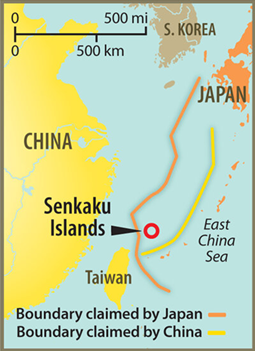
● Asia-Africa Growth Corridor (AAGC): The AAGC part of the broader Indo-Pacific freedom corridor, initiated by India and Japan. It is a strategic initiative in response to China's BRI.
● Multilateralism: Support for UN Security Council reform and mutual backing for permanent seats. Japan backs India's NSG membership
✔ Security
● Counterterrorism Cooperation: Strong commitment to a "zero-tolerance" stance on terrorism.
o Example: Joint efforts against groups like Al-Qaida, JeM, and LeT.
● Military and Strategic Ties: India and Japan have strengthened military ties through joint exercises, strategic dialogues, and defense cooperation agreements to enhance regional security and counterbalance rising regional threats.
o Example: Malabar Naval Exercise, Acquisition and Cross-Servicing Agreement (ACSA), etc.
● Joint Military Exercises: Japan joins India and the USA in the annual Malabar exercise since 2014.
o Example: Biennial naval exercise (JIMEX) and army exercise (Dharma Guardian).
● Defence Agreements: Signed agreements in 2014 and 2015 on defence cooperation, technology transfer, and security measures.
● Example: Acquisition and Cross-Servicing Agreement (ACSA) allows access to each other's military bases for logistical support.
● Two-Plus-Two Dialogue: Involves India's defence and foreign secretaries and their Japanese counterparts. Sets the agenda for discussions between the two prime ministers and agreements.
● Quadrilateral Security Dialogue (Quad): Informal strategic dialogue among India, USA, Japan, and Australia to ensure a free and open Indo-Pacific, especially in the face of China's influence.
✔ Economy
● Trade Agreement: Agreement to boost business activities and eliminate tariffs on a significant percentage of exports and imports between the two countries.
o Example: India and Japan's Comprehensive Economic Partnership Agreement (CEPA) started in August 2011.
● Mutual interests: India's large domestic market is a key attraction for Japan and Japan's aging population complements India's youthful workforce.
● Investment: Direct investment from Japan to India has been increased, and Japan was the 5th largest investor for India in FY2021
o Example: Suzuki's partnership with Maruti Suzuki is a notable Japanese investment in India.
● Currency Swap Arrangement: To maintain balance of payments and lowers the cost of capital for Indian entities seeking foreign capital.
o Example: India and Japan have a currency swap arrangement worth up to USD 75 billion.
✔ Infrastructure
● Japanese ODA and Projects: India is a major recipient of Japanese Official Development Assistance (ODA).
o Example: Notable projects include the Delhi Metro.
● Rail and Industrial Corridor: Japan provided a $4.5 billion loan for a Delhi-Mumbai railway project.
o Example: Other investments like the Chennai-Bangalore Industrial Corridor, Mumbai Ahmedabad High-Speed Railway
● Others: Several other infrastructure investments have been undertaken by Japan in India.
o Example: Agreement to develop Varanasi as a 'Smart City' was signed in 2014. Discussions for infrastructure improvement, starting with a 15MW diesel power plant on South Andaman Island.
● India-Japan Act East Forum: Focuses on NE states' infrastructure and connectivity, including road projects in Mizoram, Assam, and Meghalaya.
● Nuclear Cooperation: India and Japan signed a nuclear energy cooperation deal in 2017.India became the first non-NPT signatory to have such an agreement with Japan.
● Climate: "Clean Energy Partnership" was announced recently to achieve carbon neutrality
o Example: other initiatives like “Japan-India Energy Ministerial Dialogue”
✔ Social
● Healthcare Collaboration: India and Japan signed a healthcare cooperation agreement.
o Example: Agreement to combine India's Ayushman Bharat with Japan's Asia Health and Wellbeing Initiative.
● Science and Technology Partnerships: Several initiatives have been signed together in this arena.
o Example: MOUs between JAXA and ISRO for outer space cooperation, "India-Japan Digital Partnership" (I-JDP).
Challenges to India Japan Relations
✔ Trade Barriers: Tariff and non-tariff barriers are significant factors affecting Indo-Japan trade.
● Example: Japan imposes import prohibitions and quantitative restrictions on items like fish and silk from India.
✔ Sanitary and Phytosanitary Measures (SPS): Japan's SPS measures are obstacles to Indian exports of poultry, meat, shrimps, and fruits such as mangoes and grapes..
✔ RCEP: India's decision to withdraw from RCEP negotiations had a lukewarm response in Japan. Disagreements on trade deals and intellectual property rights (IPR) were evident during RCEP negotiations.
✔ Data localisation: India's stance on data localization and opposition to the TRIPS Plus regime have created tensions in the economic relationship.
✔ Disagreement on Osaka Track: India boycotted the Osaka track during G20 as it overtly undermined “multilateral" principles of consensus-based decisions in global trade negotiations.
Way Forward
✔ Barrier Resolution: Both nations should work to eliminate trade barriers, including tariffs and non-tariff restrictions.
✔ Mutual Support for a Strong India: Japan should provide enhanced support for India's growth, recognizing that a strong India is in Japan's best interests.
✔ Leveraging Japan's Expertise: India should leverage Japan's strengths, particularly in medical equipment and healthcare, to bolster its own healthcare infrastructure.
✔ Advocating a Rules-Based World Order: Both nations should advocate for a rules-based and inclusive global order, promoting diplomacy, cooperation, and adherence to international norms.
✔ Facilitating Communication and Connectivity: Enhance communication and connectivity to promote unimpeded trade, exchange of people, technology, and ideas, contributing to shared prosperity.
✔ Collaborating for Indo-Pacific Stability: Strengthen cooperation to ensure peace, stability, and prosperity in the Indo-Pacific region, addressing common security and economic challenges.
By committing to these principles, India and Japan can forge a deeper partnership that advances their shared interests and contributes to regional and global stability.