Intensified struggle for linguistic reorganization of states
Published on 29 Sep 2025
The boundaries of the provinces before 1947 was drawn up in a haphazard manner making a strong case for reorganization of states along linguistic lines. There was vigorous struggle for linguistic autonomy in many regions like the Telugu speakers under Swami Sitaram and Punjabi speakers under Tara Singh.
Key outcomes of linguistic state reorganization
Formation of states like Andhra Pradesh (Telugu-speaking), Maharashtra (Marathi-speaking), and Karnataka (Kannada-speaking).
Creation of Gujarat (Gujarati-speaking) and Punjab (Punjabi-speaking) as separate states.
Formation of Kerala (Malayalam-speaking) and Tamil Nadu (Tamil-speaking) as distinct states.
Reorganization of Assam to include the tribal areas of the Northeast, forming the present-day states of Assam, Meghalaya, Mizoram, Nagaland, and Arunachal Pradesh.
Impact of state reorganization
Consolidated national identity: Reorganisation helped to reduce the linguistic tension between various groups.
Preservation of cultural and linguistic diversity: Reorganization along linguistic lines was a significant step towards preserving cultural diversity.
Example: Development of language-based media and literature.
Political impact: It allowed for the representation of various linguistic and cultural groups in the political process.
Ease of administration: The administrative structure could be tailored according to the unique needs of linguistic groups.
Overall, the linguistic reorganization of Indian states was a pivotal moment in India's post-independence history, promoting cultural diversity and regional identity while also shaping the country's political landscape.
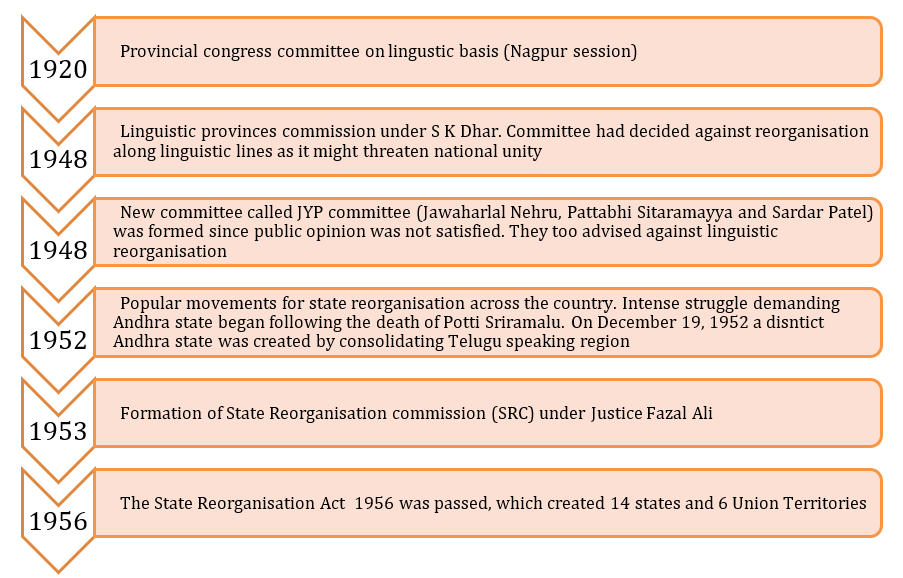
Reasons behind Aversion to Linguistic Reorganization in the Initial Years After Independence
Nation Building and Unity: The leaders of the newly formed nation were focused on building a united and cohesive nation. They were concerned that linguistic divisions could potentially fragment the country along linguistic lines, undermining the unity and stability of the nation.
Colonial Legacy: The British colonial administration had organized provinces and states in India primarily for administrative convenience, without much regard for linguistic or cultural factors.
Fear of Regionalism: Some leaders worried that emphasizing linguistic identities might encourage demands for separate states or even secession by linguistic and regional groups.
Administrative Challenges: Implementing linguistic reorganization would have required a significant administrative overhaul, including the redistribution of resources, government offices, and infrastructure.
Time and Priorities: In the immediate aftermath of independence, the Indian government had to deal with pressing issues such as partition-related violence, rehabilitation of refugees, and economic development. Linguistic reorganization was not a top priority at that time.
Tags:
History & Culture
Keywords:
Intensified struggle for linguistic reorganization of states
Swami Sitaram
Tara Singh
Nagpur session
JYP committee
Jawajarlal Nehru
Pattabhi sitaramayya
sardar patel
S k Dhar committee
potti sriramalu
Fazak Ali commission
state reorganisation committee
Key outcomes of linguistic state reorganization
Impact of state reorganization
Reasons behind Aversion to Linguistic Reorganization in the Initial Years After Independence
Fear of Regionalism
Syllabus:
General Studies Paper 1
Topics:
Post-Independence Consolidation
Related Articles